Description
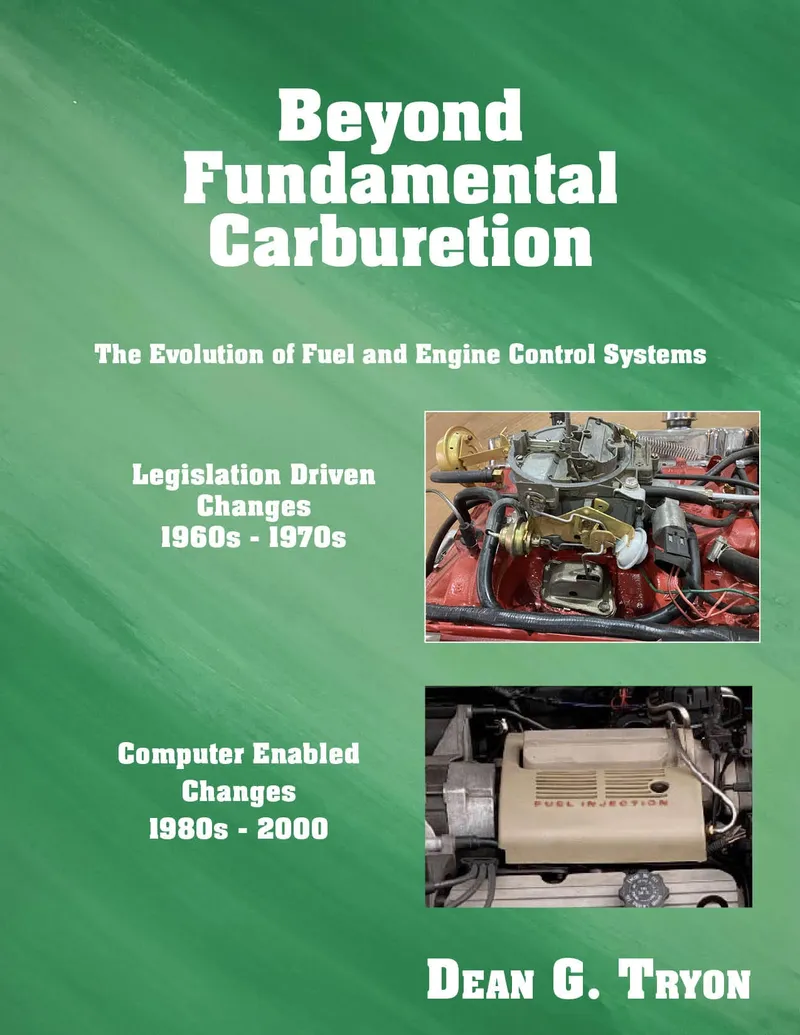
This book is a continuation of the topics covered in its predecessor, Fundamental Carburetion. It is for antique car owners and enthusiasts who are interested in understanding how and why the fuel and emission control systems evolved in the 1960s-2000 era. While the principles described in Fundamental Carburetion still apply to this period, the devices had to evolve to meet the ever-tightening emissions requirements.
Two important changes impacted engine design during this period. First, California and the Federal government enacted legislation beginning in the 1960s that required engine changes to reduce vehicle crankcase and exhaust emissions. Second, it became practical to install computers in cars by the late 1970s. This technology enabled major changes to fuel systems, engine control, and exhaust emissions treatment. It initially allowed a closed loop, three way catalytic converter with multiple sensors to simultaneously control all three major exhaust pollutants. A few years later, electronically controlled fuel injection provided a significant improvement in both emissions control and overall performance.
The antique car hobby continues to evolve over time. Cars from the 1970s and 1980s, which are equipped with the emissions control devices discussed in this book, have been part of the hobby for a number of years. At the time of this writing, we are beginning to see cars from the 2000s becoming an important part of the hobby.
As we continued to do seminars on the basics of carburetion, we realized that enthusiasts needed to understand emissions systems as well in order to keep these cars running properly. Just as we sought to demystify the operation of the carburetor and related systems, we developed seminars to cover the unique challenges of emissions systems. As before, those seminars then evolved into this book.